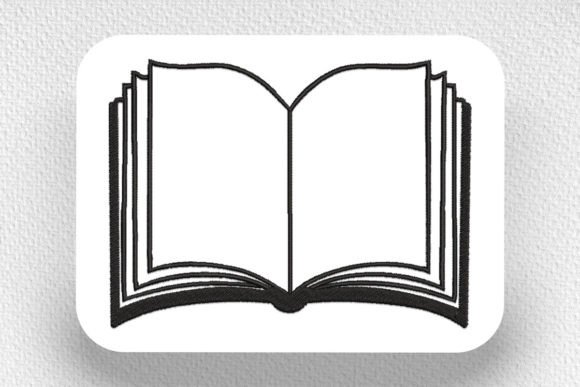
Open Book Embroidery Design
First Impression: Warm, Timeless, and Instantly Relatable
As an embroidery designer who’s prepped over 200 craft fair booths—and watched thousands of shoppers pause at a single stitch—I’ll say it plainly: Open Book lands with quiet confidence. It’s not loud or trendy. It’s not cartoonish or overly cutesy. It reads as thoughtful, literary, and gently nostalgic—a soft farmhouse-meets-modern-minimal vibe that appeals across ages and aesthetics. For Back To School season, it avoids cliché (no apples, no pencils) and instead taps into the deeper emotional draw of learning, curiosity, and personal growth. That’s why it works just as well on a linen tea towel in a boutique as it does on a denim tote at a makers’ market.
Where Open Book Shines on Craft Fair Products
This design doesn’t need to shout to be seen—it earns attention through familiarity and intention. Here’s how it performs across your most common handmade product categories:
- Tote bag design: A standout focal point when centered on the front panel of a natural canvas or oat-colored cotton tote. The open pages read clearly even from six feet away—no tiny details competing for attention.
- Apron embroidery: Perfectly scaled above the pocket or along the waistband. Its balanced symmetry complements the clean lines of a modern apron while adding warmth to a rustic bib style.
- Tea towel embroidery: Works beautifully on the lower corner or centered mid-panel. Because it’s not overly dense, it holds up well on textured terry or waffle-weave towels without puckering or stiffness.
- Embroidered patch: Highly effective as a sew-on or iron-on option—especially when backed with fusible webbing. Customers love attaching these to backpacks, denim jackets, or kids’ lunchboxes.
- Fabric pouch & pillow cover: Adds quiet sophistication. On a neutral linen pouch or oatmeal linen pillow cover, Open Book feels intentional—not decorative clutter.
- Caps & curved surfaces: Proceed with caution. While the outline is clean, any interior detail (like page lines or subtle shading) may compress or distort on a baseball cap’s dome. Best reserved for flat-front panels or structured trucker caps with minimal curve.
What Makes Open Book a Smart Craft Fair Product Choice
Three things make this machine embroidery design commercially smart for handmade sellers: clarity at a glance, strong visual rhythm, and versatile emotional resonance. At a crowded fair, shoppers scan in under two seconds—Open Book delivers instant recognition (“Yes—that’s a book!”) without needing explanation. It photographs exceptionally well for Etsy listings and printable mockups: crisp edges, balanced negative space, and natural contrast between page and spine areas mean less editing, faster uploads, and higher click-through rates.
It’s also highly repeatable for batch production. With moderate stitch density and no micro-details or fragile thread loops, you can run 30+ identical tote bags in one day without re-hooping fatigue or tension anxiety. That consistency builds trust—both in your booth display (where uniformity reads as professional) and in customer perception of your handmade product as polished and intentional.
Careful-Use Notes Every Embroidery Designer Should Check
Before cutting fabric or loading your hoop, take these practical steps:
- Test on scrap fabric first—especially if using dark fabric. Page outlines may fade without high-contrast thread colors (e.g., cream on navy, white on charcoal).
- Review spacing and inner detail. If the design includes fine page lines or small serif lettering (not stated, but common in “book” motifs), confirm they hold up at your intended size—especially on textured towels or thick twill.
- Confirm hoop size and stabilizer needs. A medium-density design like Open Book typically runs smoothly on 4x4 or 5x7 hoops—but always verify before stitching 50 units. Use cutaway stabilizer for knits and tear-away for stable wovens.
- Inspect stitch density in page-turn areas. Overly dense fills in the “open” section can cause stiffness on soft fabrics like quilting cotton or lightweight linen—opt for lighter fill patterns if available in your embroidery file.
- Create at least one real mockup before listing or packing for market. See how it drapes on a tote, how light catches the thread, and whether the scale feels right next to other designs in your lineup.
How Open Book Strengthens Your Booth & Brand
In person, Open Book adds depth to your display—not flash, but substance. It signals thoughtfulness to buyers who value meaning over mass appeal. Paired with complementary designs (a simple pencil, a stack of books, or minimalist quote), it anchors a cohesive “learning lifestyle” theme ideal for Back To School, teacher appreciation, or lifelong learner gifting. It also elevates perceived value: customers consistently pay more for embroidered items that feel curated rather than decorative.
For Etsy sellers and small shop owners, this design supports brand consistency across digital and physical touchpoints. Use the same Open Book motif on your packaging tag, social media banners, and printable mockups—and you build recognition without repetition fatigue. It’s flexible enough for seasonal shifts too: swap thread colors (burgundy + gold for fall, mint + cream for spring) and it stays fresh year after year.
Final Designer Note: Verify Licensing Before You Sell
This is non-negotiable. Since Open Book is marketed as a machine embroidery design for craft fair and handmade market products, confirm whether your purchase includes commercial embroidery rights. Not all digital embroidery files do—and many restrict use to personal projects only. If you plan to sell finished products (totes, patches, aprons), ensure your license explicitly permits commercial use. When in doubt, contact the designer or seller directly. A single copyright claim can derail an entire craft season.
Bottom line? Open Book is a quietly powerful addition to your design assets—timeless enough to last beyond trends, practical enough to produce at scale, and emotionally resonant enough to convert browsers into buyers. Just stitch it with intention, test it with care, and let the story speak for itself.